


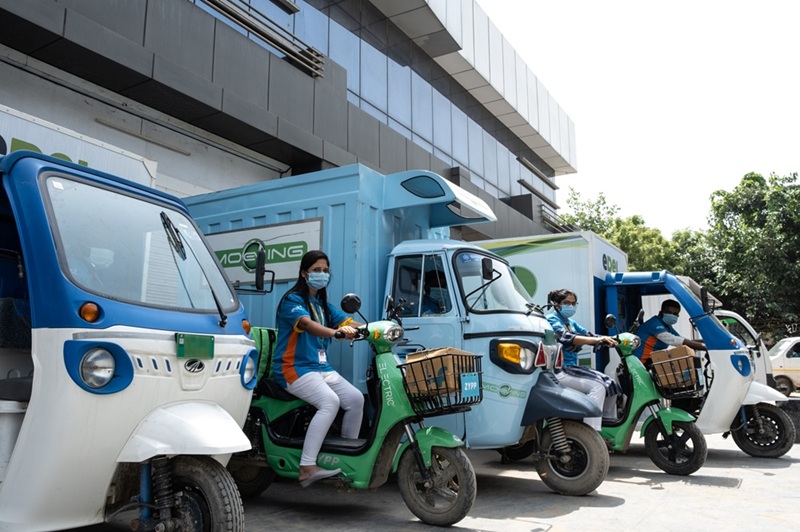
Flipkart, India’s homegrown e-commerce marketplace, today released “The Last-Mile Leap: Empowering Delivery Fleets to Accelerate India’s Electric Mobility Transition,” a white paper based on insights from a survey of more than 6,000 Wishmasters (delivery partners) across India. According to the study, delivery partners across South India are showing strong interest in transitioning to electric vehicles, with 48% of the surveyed cohort in the South expressing willingness to adopt EVs, according to insights from Flipkart’s research.The findings highlight growing momentum for electric mobility across the southern delivery ecosystem as riders increasingly recognise the economic and operational benefits of EV adoption.
Strong Interest in EV Adoption Among Delivery Partners
The study indicates significant interest in EV adoption among delivery partners. Approximately 46% of respondents across the country expressed willingness to transition to electric vehicles, signalling strong readiness within the workforce. However, adoption remains limited today, with 94.3% of delivery partners currently relying on petrol-powered two-wheelers. The findings suggest that the gap between intent and adoption is primarily driven by structural barriers rather than behavioural resistance.
Among the key challenges cited by delivery partners were:
High upfront vehicle costs (26.6%)
Limited EV availability in certain geographies (22.8%)
Concerns around range and performance (17.8%)
Charging access (14%)
Performance reliability (11.8%)
Servicing and lifecycle support (7%)
Operational Patterns Align with EV Capabilities
The research also highlights that delivery operations in India are well aligned with the capabilities of electric two-wheelers currently available in the market.
Nearly 29% of delivery partners reported travelling between 40–60 kilometres per day, while another 21.8% travel between 60–80 kilometres daily. These travel patterns fall within the operating range of most electric two-wheelers, even under stop-start urban delivery conditions. Fuel costs also represent a significant operational expense for riders, with nearly 90% of surveyed delivery partners spending between ₹2,000 and ₹5,000 per month on petrol.
“Sustainability at Flipkart is about creating a value-led ecosystem that benefits the planet and the people who power our platform. For delivery partners, vehicle choice is ultimately an economic decision. Electric vehicles have the potential to significantly reduce operating costs while improving income stability. At the same time, last-mile delivery represents one of the most practical segments for electrification given its high utilisation and urban footprint,” said Nishant Gupta, Head of Sustainability, Flipkart Group. “Our experience shows that when ecosystem enablers, from financing and charging infrastructure to servicing support, come together, EV adoption can scale quickly while delivering both livelihood and environmental benefits.”
Industry research referenced in the whitepaper suggests electric two-wheelers can reduce fuel and energy costs by up to 70-80%, while lower maintenance requirements may translate into 15-20% improvements in delivery partner income.
Last-Mile Delivery as a Strategic Opportunity for Electrification
The whitepaper highlights that last-mile delivery fleets represent one of the most efficient entry points for accelerating India’s EV transition. High-frequency urban routes, short travel distances and high vehicle utilisation mean that electrifying delivery fleets can disproportionally reduce emissions and generate economic savings per vehicle compared to private passenger vehicles.
Providing an industry perspective, Divya Sharma, Executive Director – India, Climate Group, said, “Globally, high usage fleet segments have led the transition to electric mobility. Urban last-mile delivery sits squarely in this category. With the right ecosystem support to this segment, including financing, charging infrastructure and delivery-ready vehicles, India can accelerate EV adoption.”
Ecosystem Collaboration Key to Scaling Adoption
The whitepaper emphasises that electrifying delivery fleets at scale will require coordinated progress across multiple parts of the EV ecosystem.
Key enablers identified in the research include:
Innovative financing models, such as leasing and low-cost loans, to reduce upfront costs
Charging-as-a-service models tailored to delivery hubs and logistics facilities
Delivery-optimised EV designs that address payload and durability needs
Structured training and onboarding programmes for delivery partners
Lifecycle assurance mechanisms, including servicing networks and battery health tracking
As India works toward its 30% EV penetration target by 2030, the whitepaper highlights the critical role that high-utilisation segments such as last-mile delivery can play in accelerating adoption. By aligning financing, charging infrastructure, vehicle design and workforce support, the report notes that last-mile electrification can become one of the fastest pathways to scaling electric mobility in the country.
